

Why Humidity and Storms Damage Orlando Fireplaces
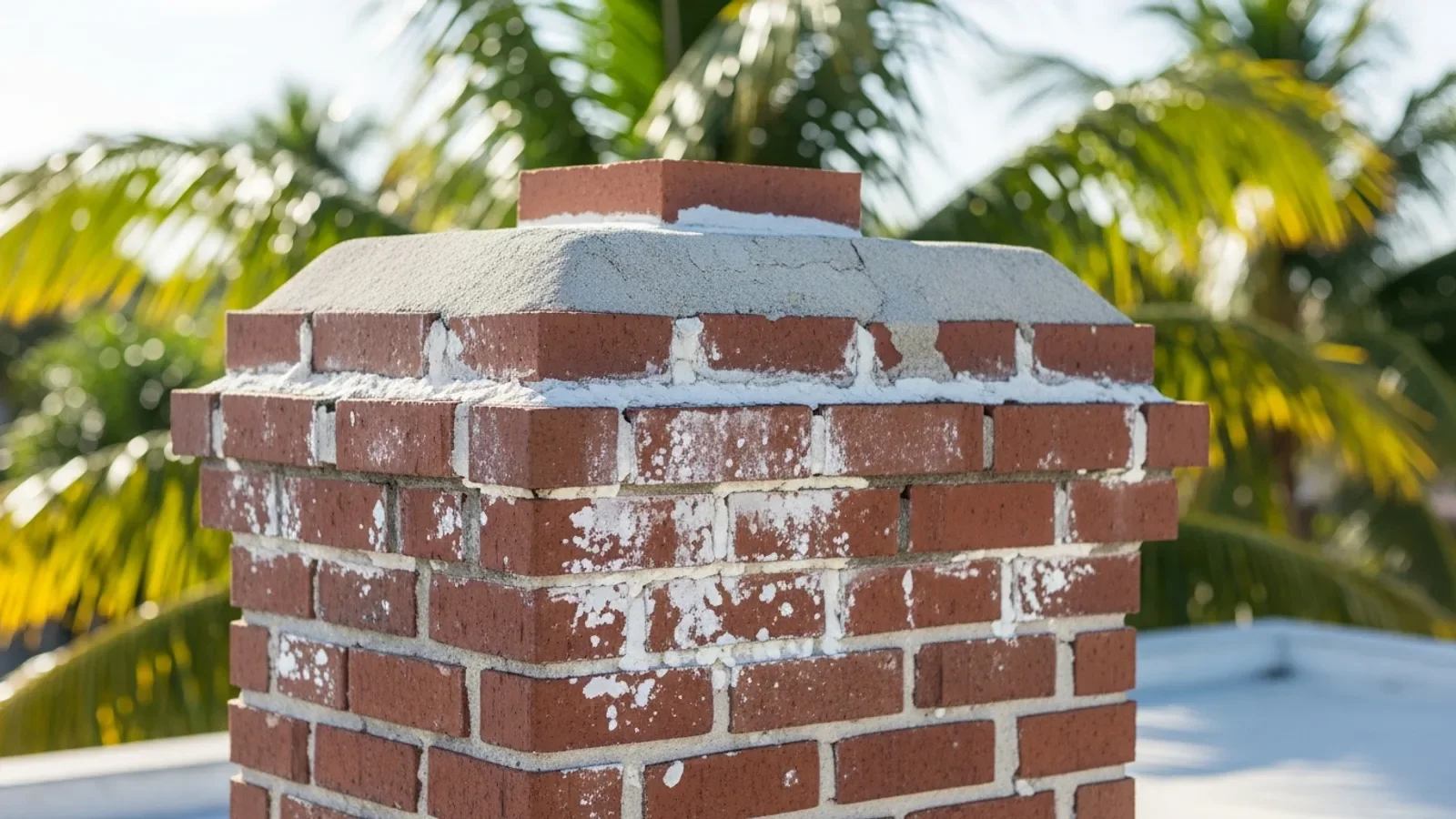
Moisture is the most common enemy of a chimney, and Orlando supplies plenty of it. Between the humid air that hangs over Central Florida for most of the year, the near-daily afternoon thunderstorms of summer, and the heavy rain that tropical systems drive across the state, the masonry, metal, and mortar that make up your chimney spend a large part of the year wet or damp. Understanding how that process works is the first step toward keeping your fireplace structurally sound for the long haul.
What exactly does "humid Florida air" do to a chimney in Orlando?
Humid air is not simply uncomfortable; it is a steady source of water. Brick and mortar are porous, so they take on moisture from the air and from rain, then release it slowly when the sun comes out. Because a chimney sits at the highest point of a roofline, it takes the full force of wind-driven rain before almost anything else on the property. The cap, crown, flashing, and upper masonry courses are exposed to repeated soaking from June through September, and oak and pine debris, pollen, and leaf litter on the roof and crown hold that water in place long after the storm ends.
How does moisture actually break down chimney masonry?
Moisture deterioration works through repeated wetting and drying. When rain soaks into brick or mortar, it carries dissolved minerals deep into the porous material. As the surface dries, which happens quickly in Florida's intense sun, the water evaporates and leaves those minerals behind as deposits, a process that shows up as efflorescence. Meanwhile, the outer layer of brick expands and contracts with each hot-then-soaked cycle, and a hard freeze night in winter can stress water-filled masonry even further. Over repeated cycles, the stress causes spalling (surface flaking), cracking, and eventually weakening of mortar joints. The damage is gradual and often invisible until a joint crumbles or a brick face pops off entirely.
Does humidity make chimney deterioration worse?
Yes, significantly. In Central Florida, the air stays humid for much of the year, and during the summer rainy season it is often thick with moisture even between storms. High ambient moisture keeps chimney masonry perpetually damp, which means it rarely gets a long dry stretch to recover. Humidity also encourages efflorescence, the white chalky staining you sometimes see on brick exteriors, which is a visible sign that water is already moving through the material. Moisture also accelerates rust on metal components like dampers, chase covers, and flashing, compounding the damage beyond the masonry alone.
If you want it handled correctly the first time, consider professional chimney sweep in Orlando.
Which chimney components are most vulnerable to Orlando's climate?
Several components take the hardest hits in a humid, stormy environment:
-
Mortar joints are the first to show wet-dry cycling damage because mortar is more porous than fired brick.
-
The chimney crown (the concrete cap that seals the top of the masonry) develops hairline cracks that admit rainwater directly into the flue system.
-
Flashing, the metal seal between chimney and roof, corrodes and lifts over time, creating gaps where water intrudes.
-
Metal dampers and chase covers rust, often seizing or developing holes that let moisture and pests into the firebox.
-
Firebrick and refractory mortar inside the firebox can also absorb condensation that travels down the flue, weakening the interior lining over time.
Knowing which parts are most at risk helps you prioritize inspections. For a deeper look at visible warning signs, see how to spot moisture damage on your chimney.
What makes Orlando's inland climate hard on chimneys?
Orlando sits in the middle of the Florida peninsula, a long way from the shore, but that does not make it gentle. Central Florida has some of the most lightning in the country, thunderstorms arrive almost daily in summer, and tropical storms and hurricanes can cross the state with heavy wind-driven rain. Many of the area's neighborhoods in Orlando, Winter Park, and Altamonte Springs were developed over the middle decades of the last century, so a share of the local housing stock has masonry chimneys that are decades old. Chimneys built in those years often used standard Portland cement mortars that have now been through many seasons of wetting and drying. Newer homes often have factory-built fireplaces with metal flues inside wood-framed chases, which have their own weak points: chase covers, termination caps, and flashing that must stay watertight. Whichever type you have, routine maintenance is especially important for long-standing Orlando properties.
Can creosote buildup interact with moisture damage to create additional problems?
Many Orlando homeowners rely on expert chimney sweep in Orlando for exactly this.
It can, and the combination is worth understanding. Creosote, the byproduct of wood combustion that coats the inside of a flue, is acidic. When it absorbs moisture (which is plentiful in Orlando's climate), it produces weak acids that attack the flue liner and mortar from the inside. If rain has already weakened the mortar joints from the outside, the interior acid attack can cause deterioration to progress much faster than either factor alone. A compromised flue liner also raises safety concerns, since it is designed to contain combustion gases and heat. This is one reason why professional chimney cleaning in Orlando addresses more than just soot removal, it also gives a technician the opportunity to assess whether the liner and mortar are holding up against both weather and combustion-related wear.
Does moisture damage happen even when a fireplace is rarely used?
This is one of the most common misconceptions among Orlando homeowners. External moisture deterioration is entirely independent of how often you light a fire. The chimney exterior, crown, flashing, and upper masonry are exposed to the weather every day regardless of fireplace use. In fact, a rarely used fireplace can sometimes fare worse in one respect: without the heat from regular fires to dry out the interior flue, condensation accumulates inside the liner, mixing with any residual creosote or debris to create a damp, corrosive environment, and birds, squirrels, or raccoons may start nesting in the unused flue. If your fireplace is more decorative than functional, that does not mean the chimney can skip regular inspection and maintenance cycles.
How does everyday moisture damage compare to the damage caused by Florida's hurricane season?
Storm damage tends to be acute and obvious, a cracked crown after a close pass, displaced flashing from wind pressure, or debris impact from a fallen oak limb. Moisture damage is chronic and subtle, accumulating over years before it becomes visible or structurally significant. Both matter, but homeowners often focus exclusively on post-storm repairs while overlooking the slow-motion deterioration happening between storms. The two also interact: a chimney already weakened by years of wetting and drying is more likely to sustain serious damage during a storm than one with intact mortar joints and a sound crown. Staying ahead of moisture deterioration through consistent maintenance is also a form of storm resilience. A well-planned routine is covered in more detail at the right maintenance schedule for Central Florida chimneys.
What does professional chimney cleaning do to address moisture damage?
Ready for the next step? Learn how chimney sweep services in Orlando can help and reach out to the team.
A thorough cleaning does several things that matter specifically in a humid environment. First, it removes soot, creosote, and any accumulated debris that holds moisture against the flue walls and accelerates interior corrosion. Second, the cleaning process gives a trained technician close access to the firebox, liner, and damper, components that are otherwise difficult to evaluate without proper tools and lighting. During that access, early signs of efflorescence, mortar erosion, rust, or animal nesting can be identified before they become bigger problems. Third, removing built-up deposits reduces the acidic load inside the flue, slowing the interior degradation that compounds external moisture damage. Scheduling chimney cleaning with an Orlando specialist is not just a fire-safety measure; in a humid market, it functions as preventive preservation for the entire chimney system. To understand how to evaluate a cleaning provider, what to look for when hiring a chimney sweep in Orlando offers useful guidance.
Are there protective measures homeowners can take between professional visits?
Several light maintenance habits help slow the rate of moisture damage between professional service appointments:
-
Keep the damper closed when the fireplace is not in use. An open damper draws humid air, and sometimes wildlife, directly into the flue interior.
-
Check the chimney cap after significant storms. A displaced or cracked cap allows rain and animals to enter freely at the top of the flue.
-
Look for efflorescence (white chalky deposits) on the exterior masonry after dry spells. New or spreading staining is a signal that moisture movement is active and worth reporting to a professional.
-
Clear vegetation and debris near the chimney. Vines and shrubs trap moisture against the masonry, and oak and pine litter on the roof and crown slows the drying that would otherwise limit damage.
-
Note any rust staining below the chase cover or flashing. Surface rust streaks on the exterior masonry usually mean the metal components above are corroding and may need attention.
None of these steps substitute for professional inspection and cleaning, but they help you catch changes early and give your service technician useful information when they arrive.
Moisture deterioration in Orlando chimneys is a real, ongoing process driven by the area's climate, storms, and housing age. Chronic humidity, repeated wetting and drying, and rusting metal work together on every exposed surface of a chimney, often well before any visible damage appears. Staying informed about how these forces operate puts you in a much better position to protect your fireplace investment. When you are ready to have a professional assess where your chimney stands, reaching out to a local specialist is the most reliable next step.
Continue reading